
Filters


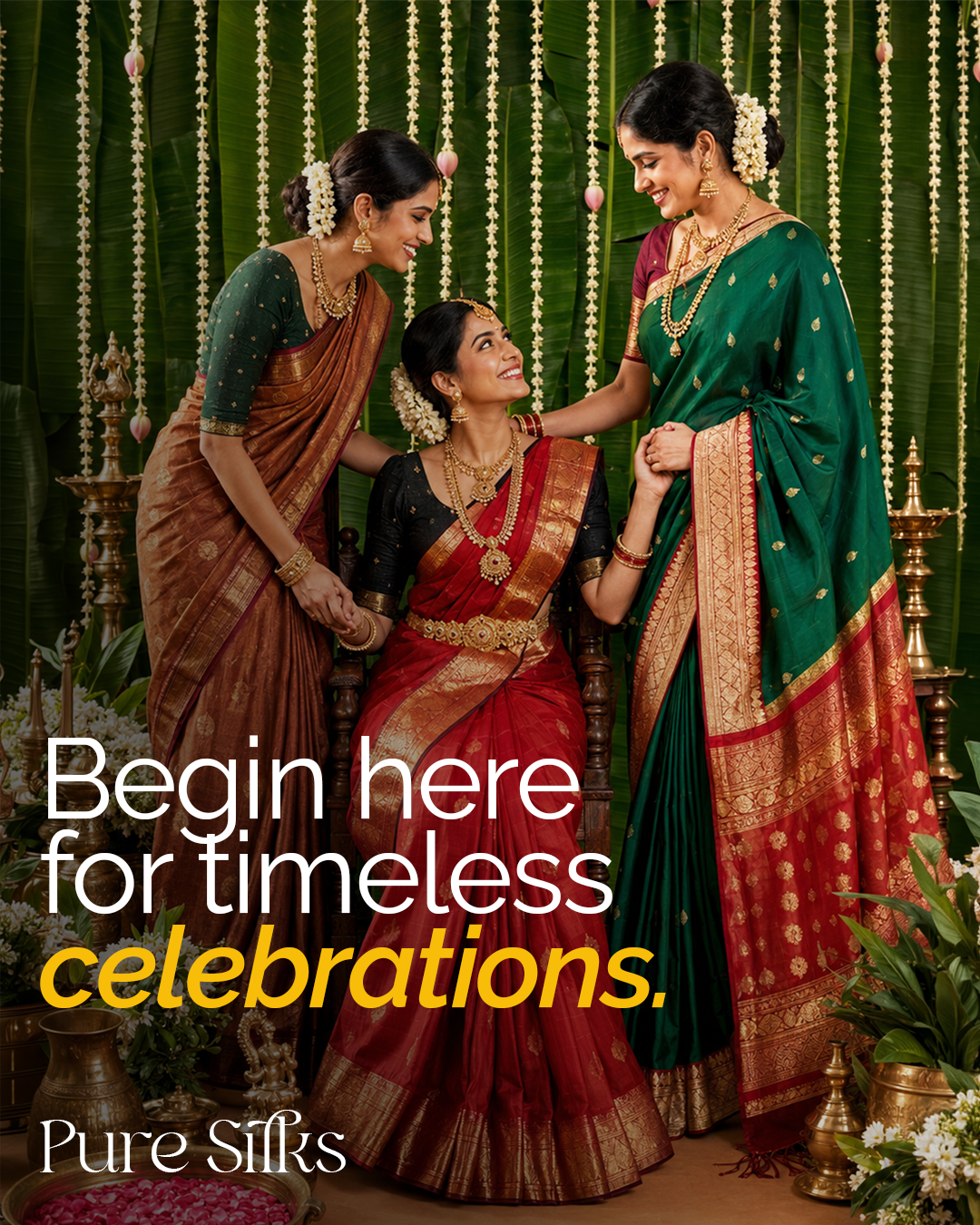


The saree is not a complicated garment. It's six yards of fabric and three minutes of draping — if you know how. If you don't, those three minutes become ten, then fifteen, then a small crisis in front of the bathroom mirror while everyone waits downstairs.
Ready to wear sarees exist to fix that problem. Not by simplifying the saree itself, but by pre-stitching the drape so the shape is already done before you put it on. The pleats are set. The pallu is pinned. You step in, fasten, and you're dressed. No compromise on how it looks. Just the time removed.
That's the honest case for them.
When You Want to Wear a Saree But Not Spend the Morning on It
There's a specific occasion that ready to wear sarees were made for — the workday function. The office puja. The client meeting that's somehow also a cultural event. The college farewell where you want to look considered without taking two hours to get ready.
Wearing a saree to these things isn't impractical. What's impractical is the prep time when you also have a commute, a presentation to review, or a toddler who needs breakfast before you touch your wardrobe.
Our ready to wear saree collection covers exactly these situations. Pre-stitched, structured, and wearable in the time it takes to put on a dress. The saree look — pleats, pallu, the silhouette — without the process.
One garment. Full effect.
The Silhouette Doesn't Change — Just the Steps
The most common concern: does a ready to wear saree actually look like a saree?
Yes. The difference is in the draping process, not the result. A well-constructed ready to wear saree has the same pleated front, the same pallu, the same waist tuck that a hand-draped saree does. The shape is identical. The person standing next to you won't know.
What's different is how it goes on. A pre-stitched saree is stitched at the pleats and pallu into a fixed silhouette — sometimes attached to a fitted underskirt, sometimes as a two-piece where the skirt and saree are separate but the pleats are already done. You zip or button rather than tuck and fold.
Browse our full sarees collection if you want to compare draped and ready-to-wear styles side by side.
Fabric Choices Matter More Here Than You'd Expect
In a hand-draped saree, you can compensate for a tricky fabric — heavy georgette, stiff silk — because you're adjusting as you drape. In a ready to wear saree, the structure is set. The fabric needs to work with that construction.
Lightweight fabrics — georgette, chiffon, crepe, soft cotton blends — are the honest answer for pre-stitched styles. They move with the stitching rather than against it, hold the pleats cleanly, and don't add bulk at the waist where the underskirt seam sits. They're also comfortable through a long day, which matters when you're wearing something you didn't drape yourself and can't re-adjust easily mid-afternoon.
Our ready to wear sarees are built around fabrics that perform in pre-stitched construction — not silks that need the weight of a full drape to sit right.
Good fabric is the decision. Everything else follows.
Who Actually Wears Ready to Wear Sarees
Not just beginners. That's the assumption worth correcting.
Women who've worn sarees their whole lives also wear pre-stitched styles for the same reason someone who can cook from scratch still orders in on a Tuesday. Competence and convenience aren't opposites.
The regular saree wearer uses ready to wear for travel — one garment that folds small, arrives unwrinkled, and goes on without help in a hotel room. For early morning events where there's no one to help with the pallu. For days when the energy isn't there but the occasion still is.
The new saree wearer uses them for confidence — to look exactly right without the anxiety of whether the pleats are even or the pallu will stay. The first time you wear a saree to a formal event and feel comfortable in it, that's the moment. Ready to wear sarees make that moment accessible earlier.
Both are right.
How to Style a Ready to Wear Saree
The styling rules are the same as any saree — which is part of why ready to wear works so well. Once it's on, it's a saree. The blouse, the jewellery, the footwear, the bindi if that's your habit — all of it applies exactly as it would with a draped saree.
The blouse pairing is where to spend the most thought. A ready to wear saree has a fixed neckline and pallu fall, so the blouse becomes the main variable. A well-cut blouse in a complementary colour or contrast fabric is what lifts a simple pre-stitched saree from functional to intentional.
Keep jewellery proportional to the saree's weight and design. A heavily printed or embellished ready to wear saree needs simple jewellery. A plain or minimal one can carry something more elaborate.
That's the whole calculation.
Occasions Where Ready to Wear Sarees Work Best
Office functions and professional events — any occasion where you need to look polished and get through an eight-hour day without thinking about your pallu.
Festive casual — Diwali at a relative's, a colleague's wedding reception where you're a guest and not part of the core family, a Pongal or Navratri gathering where the dress code is festive but not ceremonial.
First saree occasions — school farewells, college cultural events, a first professional function. The occasions where wearing a saree matters but confidence matters more.
Travel and destination events — anywhere you're dressing without your usual support system and without a mirror at the right angle.
These are the situations ready to wear sarees were designed for. Not compromises. Just the right tool for specific circumstances.
Frequently Asked Questions
How is a ready to wear saree different from a pre-stitched saree?
They're the same thing. Both terms describe a saree where the pleats and pallu have been stitched into a fixed silhouette before purchase, so draping isn't required. Some ready to wear styles come with an attached underskirt; others are two-piece. The result looks identical to a hand-draped saree — the difference is entirely in how it's put on, not how it looks once you're wearing it.
Can I wear a ready to wear saree to a wedding?
For weddings where you're a guest, yes — especially if you're not the type to wear sarees regularly. Choose a style in a fabric that reads occasion-appropriate: embellished georgette, silk blends, or brocade in festive colours. For immediate family roles at weddings — where you'd typically be in traditional silk and will be in photographs throughout — a hand-draped saree is more appropriate. The pre-stitched silhouette is excellent for reception attendance and related events.
Will a ready to wear saree fit my body type?
The underskirt and drape construction in most ready to wear styles are adjustable at the waist — either with a zip, hook, or drawstring — so they accommodate a range of sizes. Check the size guide for any style you're considering, and pay attention to the pallu length if you're taller or shorter than average, as this is the element most likely to need adjustment at a tailor.
Our ready to wear saree collection covers everyday fabrics, festive styles, and office-appropriate options — all pre-stitched and ready to wear in under five minutes. Explore the full range and find the one for your next occasion.